
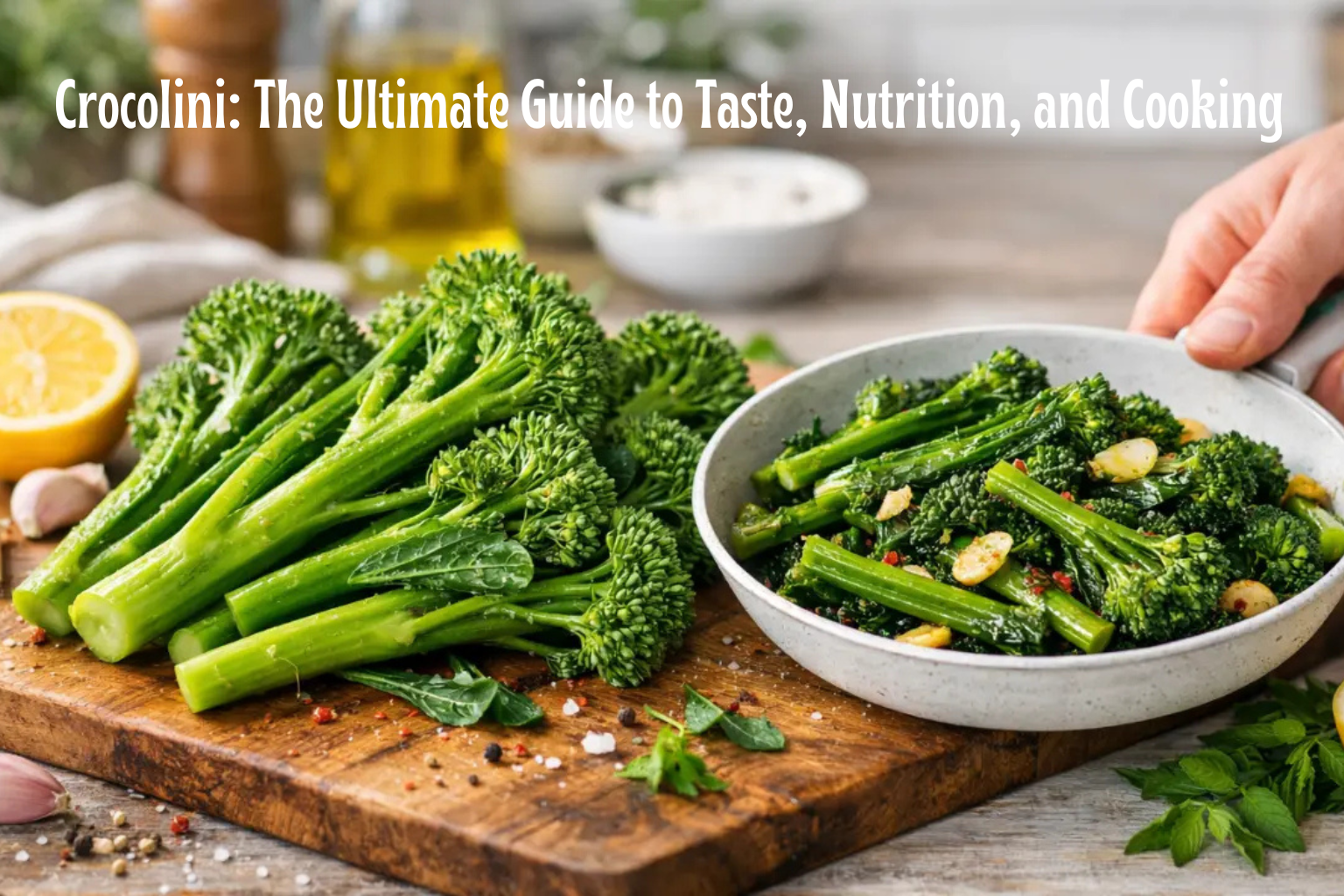
Crocolini is one of the most intriguing vegetables gaining popularity in kitchens around the world. With tender stems, vibrant green florets, and a delightful mild flavor, Crocolini blends the best traits of broccoli and kale — creating a versatile green veggie perfect for health‑minded eaters and food lovers alike. In this ultimate guide, you’ll explore everything you need to know about Crocolini: from its origins and benefits to how to cook, store, and enjoy it every day.
1. What Is Crocolini? A Delicious Hybrid Veggie
Crocolini is a hybrid cruciferous vegetable, developed through traditional breeding by crossing broccoli with Chinese kale. The result is a long‑stemmed green veggie with tender stalks, small edible florets, and gentle leaves — unlike traditional broccoli, where large stems often require peeling. Every part of Crocolini is edible, making it a low‑waste and highly flexible ingredient.
Although sometimes confused with broccolini or “baby broccoli,” Crocolini is its own cultivar with a unique texture, sweeter taste, and more delicate structure.
2. Origins and Agricultural Background
The exact origin story of Crocolini is a blend of agriculture and culinary innovation. While precise historical records are limited, most sources agree that Crocolini was developed by crossing traditional broccoli with Chinese kale (also called gai lan or Chinese broccoli). This hybridization emerged to combine the nutritional density of broccoli with the tender stems and milder flavor of Asian greens.
Initially embraced by chefs and home cooks in Europe, Asia, and North America, Crocolini has expanded from specialty markets into mainstream produce sections in many grocery stores. Its uniform growth, resilience in transport, and attractive appearance make it a favorite among growers and distributors.
3. Appearance and Flavor Profile
Crocolini stands apart from other greens with its:
- Long, slender stalks that are soft from top to bottom
- Small, compact florets with vibrant green color
- Tender leaves that are completely edible
- Mild, slightly sweet taste with subtle vegetal undertones
- Crisp yet tender texture, great for both raw and cooked dishes
Unlike conventional broccoli — which tends to have thick stalks and dense florets — Crocolini’s structure makes it easier to prepare and enjoy in a variety of cooking applications without extensive trimming.
The taste of Crocolini is mild and approachable, often described as slightly sweeter and less bitter than traditional broccoli, with gentle nuttiness that becomes more pronounced when roasted or sautéed.
4. Nutritional Value and Health Benefits
Crocolini isn’t just beautiful on the plate — it’s a nutritional powerhouse. Like other cruciferous vegetables, it provides an impressive array of nutrients, fiber, and plant compounds that support overall health.
4.1 Vitamins and Minerals
Compared to many vegetables, Crocolini offers substantial amounts of key nutrients:
- Vitamin C – Supports immune function, skin health, and collagen formation
- Vitamin A – Promotes healthy vision and immune defenses
- Vitamin K – Crucial for bone health, blood clotting, and cardiovascular support
- Folate – Supports cell growth and metabolic function
- Potassium – Plays a role in heart health and blood pressure regulation
- Iron and calcium – Important for oxygen transport and bone strength
In fact, 100 grams of raw Crocolini can provide more than half your daily vitamin C needs — making it one of the richest non‑fruit sources of this antioxidant.
4.2 Low in Calories but High in Fiber
Crocolini is naturally low in calories, making it a great choice for anyone watching their weight or seeking nutrient‑dense foods. The high fiber content supports digestion, helps you feel full longer, and can promote better blood sugar control.
4.3 Antioxidants and Plant Compounds
Like other Brassica vegetables, Crocolini contains sulforaphane — a sulfur‑based compound linked to antioxidant activity, anti‑inflammatory effects, and possible cancer‑protective properties. These compounds help combat oxidative stress and support overall wellness.
4.4 Heart Health and Immunity
The combination of fiber, vitamins, and antioxidants makes Crocolini heart‑healthy — aiding circulation, reducing inflammation, and supporting cholesterol balance. Its vitamin C content also increases immunity and helps the body fight infections.
5. Crocolini vs. Broccolini and Broccoli: What’s the Difference?
Comparing Crocolini to its relatives helps clarify what makes it unique:
| Feature | Crocolini | Broccolini | Broccoli |
| Origin | Broccoli × Chinese kale | Broccoli × Chinese kale (gai lan) | Brassica oleracea |
| Stem Texture | Tender & fully edible | Tender & edible | Thick & often peeled |
| Floret Size | Small & delicate | Small | Larger |
| Flavor | Mildly sweet | Mild & slightly sweet | Earthy & slightly bitter |
| Cooking Time | Quick | Quick | Moderately longer |
| Nutrition | High vitamins & fiber | High vitamins & antioxidants | High vitamins & fiber |
Both Crocolini and broccolini are hybrids with enhanced tenderness and sweetness compared to traditional broccoli. However, Crocolini’s stems and leaves tend to be even more delicate and versatile — perfect for raw use or quick cooking.
6. How to Select Fresh Crocolini at the Market
To get the best flavor and nutrition, choose Crocolini that is:
- Bright green in color, without yellowing
- Firm stalks that snap easily
- Compact florets that are not wilted or soft
- Fresh cut ends that are moist, not dried out
Avoid bunches that appear limp, discolored, or have dried tips — these are signs the vegetable is past its prime.
7. Storage and Handling Tips at Home
Once you bring Crocolini home, proper storage is key to extending freshness:
Refrigeration
Store Crocolini unwashed in a perforated plastic bag or produce container in the refrigerator’s crisper drawer. This helps preserve moisture without trapping too much humidity.
Paper Towel Wrap
For added freshness, wrap the stalks loosely in a slightly damp paper towel before placing them in a breathable bag — this helps maintain crispness and prevents wilting.
Shelf Life
Properly stored, Crocolini can stay fresh for 3–5 days in the fridge. If you need longer storage, blanch the stalks and freeze them — a technique that locks in flavor and nutrients for future use.
8. Versatility in the Kitchen: Cooking Methods and Tips
One of Crocolini’s biggest advantages is its culinary versatility. Its tender stems cook quickly, retain vibrant color, and absorb flavors beautifully. Here are some popular ways to enjoy it:
8.1 Steaming
Steaming Crocolini for 4–5 minutes keeps it crisp‑tender while preserving nutrients. Add a squeeze of lemon and a drizzle of olive oil for a simple, healthy side dish.
8.2 Sautéing
Lightly sauté with garlic and olive oil for about 5–7 minutes. This method enhances sweetness and keeps the texture lively — a perfect accompaniment to grilled fish or chicken.
8.3 Roasting
Toss with olive oil, salt, and pepper, and roast at 400°F (200°C) for 10–12 minutes. Roasting brings out a slightly nutty, caramelized flavor that elevates simple weeknight meals.
8.4 Stir‑Frying
Quick stir‑frying with soy sauce, ginger, and sesame oil gives an Asian‑inspired twist, perfect for pairing with rice or noodles.
8.5 Blanching for Salads
Blanch Crocolini for 2 minutes, plunge into ice water, and toss into salads for fresh crunch and color.
8.6 Raw Consumption
Thanks to its tender stems and leaves, Crocolini can be eaten raw — sliced thin and added to crisp salads or vegetable platters.
9. Crocolini in Everyday Recipes
Here are a few creative ways to highlight Crocolini in your meals:
• Lemon‑Garlic Crocolini
Steam or sauté Crocolini and toss with lemon zest, garlic, and a pinch of chili flakes for brightness and heat.
• Crocolini and Parmesan Roast
Roast Crocolini with olive oil and grated Parmesan for a savory side dish that pairs with pasta, chicken, or steak.
• Stir‑Fry Bowl
Toss Crocolini with tofu, soy sauce, ginger, and sesame seeds for a balanced vegetarian dinner.
• Crocolini Pasta
Combine lightly sautéed Crocolini with whole grain pasta, olive oil, garlic, and cherry tomatoes for a quick, healthy dinner.
10. Sustainability and Low‑Waste Consumption
Choosing Crocolini supports a more responsible and eco‑conscious diet. Because every part of the plant is edible — stems, florets, and leaves — there’s minimal waste during preparation.
Its relatively efficient growth and transport stability also contribute to lower spoilage rates, making it a smart choice for both home cooking and commercial kitchens.
11. Frequently Asked Questions (FAQ)
Q: Is Crocolini the same as baby broccoli?
Not exactly. While both are tender stem greens and visually similar, Crocolini and broccolini have distinct textures and origins. Crocolini tends to be milder and more delicate.
Q: Can you eat Crocolini raw?
Yes! Its tender stalks and leaves make it suitable for raw consumption in salads or platters.
Q: How long does Crocolini stay fresh?
Stored properly in the fridge, it stays fresh for 3–5 days. Blanching and freezing extend this further.
Q: What diets is Crocolini good for?
Crocolini fits well in vegetarian, vegan, gluten‑free, keto, and calorie‑conscious diets because it’s nutrient‑dense and low in calories.
12. Conclusion: Why Crocolini Belongs in Your Kitchen
From its unique flavor and impressive nutrition to its culinary versatility and sustainability, Crocolini deserves a spot on your plate — whether you’re a seasoned chef, a health enthusiast, or someone just trying to eat better.
It’s easy to prepare, packed with vitamins and antioxidants, and suitable for almost every diet and cooking style. Try it roasted, steamed, sautéed, or even raw — once you experience the delicious balance of tender texture and mild sweetness, Crocolini might become your new favorite green vegetable.
ALSO READ: Discover Çbiri: From Scenic Landscapes to Traditional Drinks